PROJECTS
Founded by 12 founding members representing utilities, communities, and rural water providers, Central Iowa Water Works (CIWW) is responsible for drinking water treatment, regional water system planning, and the wholesale delivery of water across both rural and urban areas of central Iowa.
These investments strengthen the resilience and reliability of the region’s water system, supporting more than 600,000 Iowans and the nearly 22 billion gallons of water they depend on each year.

Hickman Road
Feeder Main
Central Iowa Water Works is installing approximately 4,700 feet of 24-inch transmission main as part of the Saylorville Water Treatment Plant expansion project. This main will connect to the existing feeder main at the intersection of Merle Hay Road and Hickman Road and extend west along Hickman to tie into the existing system at 73rd Street and Wilshire Boulevard.
This project will increase transmission capacity and enhance water availability, supporting continued growth in the western areas of the Des Moines metropolitan region.
This project is divided into four stages, with an overall final completion date of November 30, 2026.
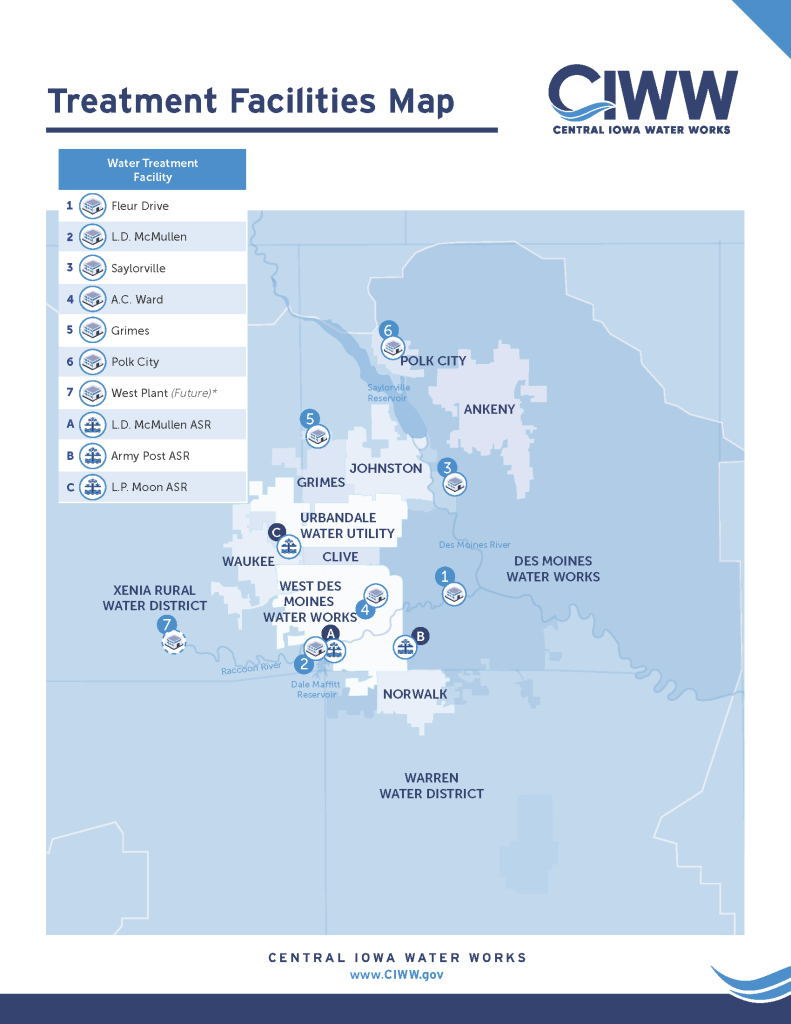
Grimes Water Treatment Plant Expansion
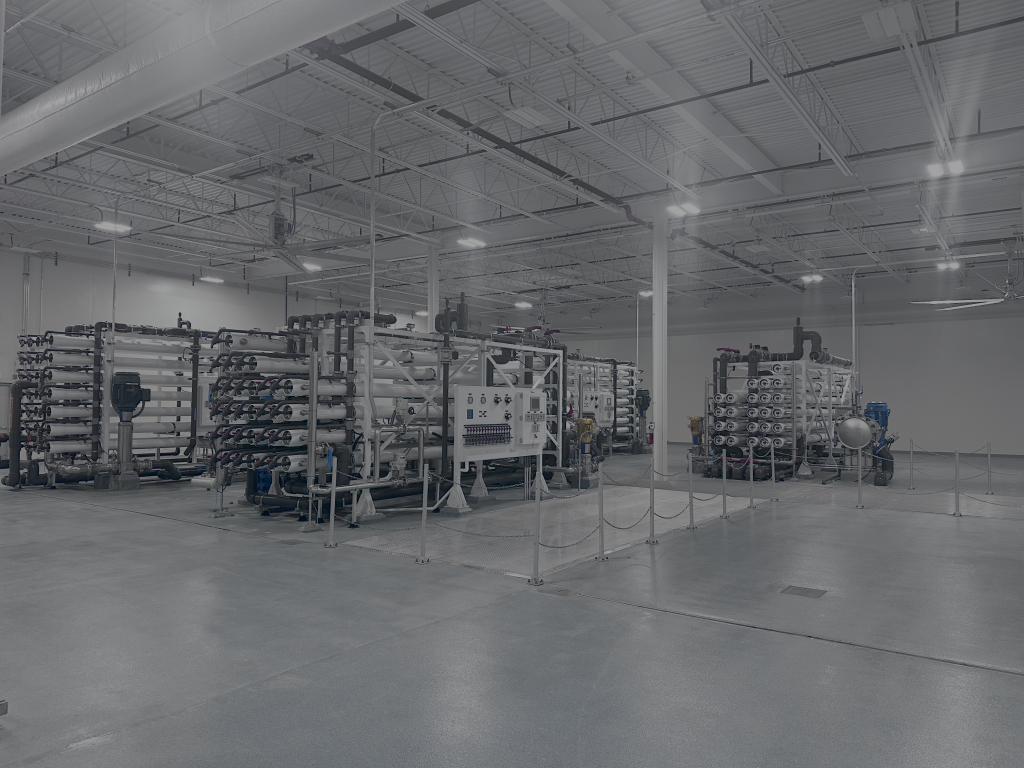
The Grimes Water Treatment Plant Expansion will increase the amount of reliable drinking water available to central Iowans. The Grimes facility includes both a Precipitative Lime Softening Plant and a Reverse Osmosis (RO) Treatment Facility, providing multiple treatment processes to produce high-quality drinking water. The expansion project focuses on increasing the combined capacity of the reverse osmosis facility from approximately 5.3 million gallons per day (MGD) to 8.5 MGD.
By treating groundwater with advanced technologies that remove contaminants and improve water quality, the expansion helps diversify the region’s water sources, reduce reliance on river water during droughts or water quality challenges, and strengthen the long-term reliability and resilience of the regional water supply.
Saylorville Water Treatment Plant Expansion
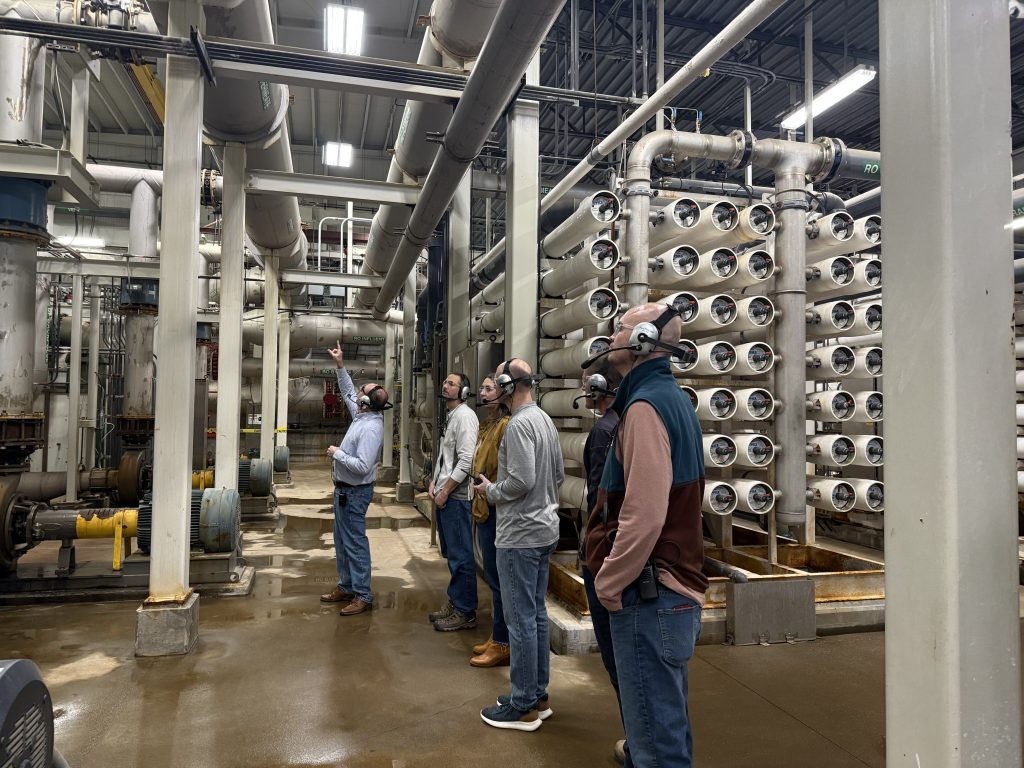
The Saylorville Water Treatment Plant Expansion will increase the amount of reliable drinking water available to central Iowans and support growing water demands throughout the Des Moines Metro area. The project will expand the existing Saylorville Water Treatment Plant by an additional 10 million gallons per day (MGD), increasing the plant’s total treatment capacity from 10 MGD to 20 MGD.
The facility utilizes advanced ultrafiltration (UF) and reverse osmosis (RO) treatment technologies to produce high-quality drinking water. Ultrafiltration removes suspended solids, bacteria, and other microscopic particles, while reverse osmosis removes dissolved contaminants such as nitrate, salts, minerals, and other dissolved substances that can affect water quality. Together, these treatment processes provide a highly reliable source of drinking water and help protect against a wide range of water quality challenges.
Expanding the plant will help diversify the region’s water supply portfolio, strengthen drought and water quality resiliency, and provide additional long-term capacity to support continued residential, commercial, and economic growth across central Iowa.The project is currently in the planning and design phase, with construction anticipated to begin in late 2026 and substantial completion anticipated in 2029.
West Water
Treatment Plant
The West Water Treatment Plant will strengthen long-term regional water supply reliability and support continued growth throughout central Iowa. The project includes the design and development of a new 12 million gallon per day (MGD) water treatment facility in Dallas County to provide additional drinking water capacity for the rapidly growing communities within the region.
The new facility will be integrated into the regional core water system and is being designed to enhance operational flexibility, improve system resiliency, and support regional water demands. The project is a key component of CIWW’s long-range planning efforts to ensure a reliable and sustainable water supply for central Iowa residents, businesses, and future economic development.