
Aquifer Storage and Recovery (ASR) wells improve reliability and flexibility for Central Iowa Water Works and more than 600,000 people it serves. These wells allow treated drinking water to be stored deep underground in a natural aquifer and used later when it is needed, helping CIWW manage water supply and maintain reliable service under a variety of conditions.
When water is available and conditions are favorable, treated drinking water is pumped into the aquifer through ASR wells and stored underground, often during periods of lower demand, such as in the winter. This stored water can be recovered later, such as times of higher demand like the summer, to support the system when source water quality is less favorable, during dry conditions, or when additional supply is needed. It provides large volumes of water over longer periods of time, increasing water supplies when it is needed the most.
Q: What is an Aquifer Storage and Recovery (ASR) well?
A: An ASR well is a deep well drilled into an aquifer that allows treated drinking water to be stored underground and recovered later. In the Jordan Aquifer, these wells are typically about 2500 and 2700 feet deep and can store large volumes of water for future use. A typical ASR well can store 300 million gallons of water underground and pump nearly 3 million gallons per day into the distribution system.
Q: How does it work?
A: Treated water is pumped underground through a well into an aquifer for storage. When needed, the same well is used to bring the water back to the surface, where it is tested to ensure quality and returned to the drinking water system for use.
Q: Why store water underground?
A: Storing water in an aquifer allows Central Iowa Water Works to store large volumes of water for use when:
- Source water quality is more challenging
- Water demand is high
- Water supply is limited, such as during dry conditions
- More flexibility is needed to respond to changing conditions
Q: Does this help during drought or poor water quality?
A: Yes. ASR wells help CIWW maintain a reliable water supply during drought, changing water quality conditions, periods of high water use, and times when water supply is limited by storing large volumes of high-quality water for future use.
Q: Why is this important?
A: ASR wells help provide:
- A reliable backup water supply
- Additional capacity during peak demand
- Flexibility to respond to changing conditions such as drought, poor water quality, or limited treatment capacity
- Support for consistent, reliable drinking water across the region
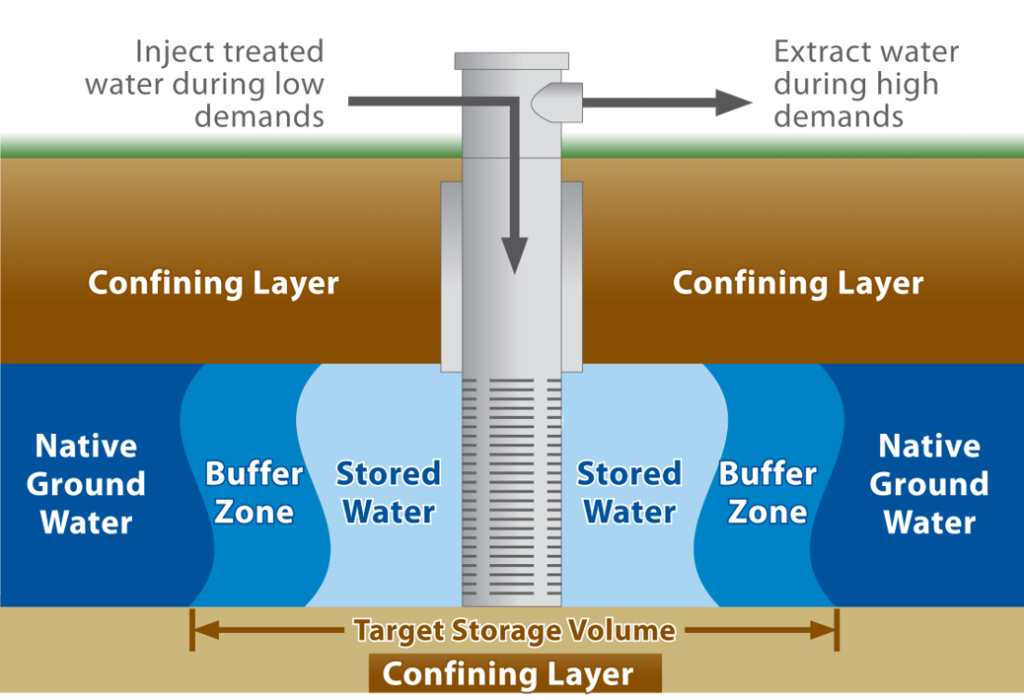
Image Reference: Tarrant Regional Water District